
The Electric Excavator Era Is Growing Up
For years, electric construction equipment has been viewed as a niche solution: smaller machines, limited run times, and applications restricted to a handful of specialized projects.
That perception is changing.
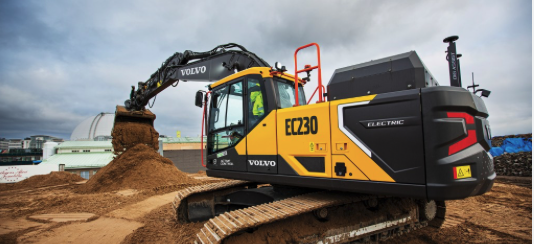
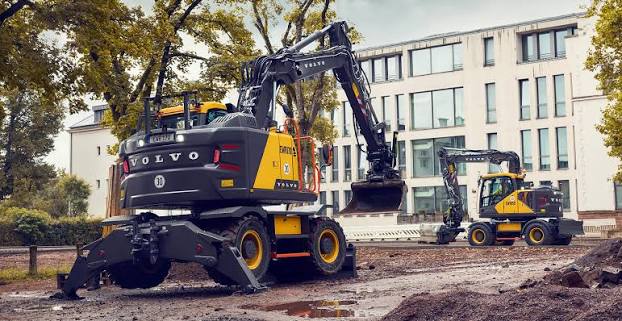
Volvo Construction Equipment recently introduced the EWR150 Electric, a 15-tonne wheeled excavator designed for real-world construction, utility, and infrastructure projects. Unlike many of the early electric machines entering the market, this is not a compact unit intended only for demonstration projects. It is a full-sized working machine built to perform the same jobs as its diesel counterpart while producing zero exhaust emissions and dramatically reducing noise.
Why This Matters
The significance of the EWR150 Electric isn’t simply that it is electric.
The significance is that it addresses one of the biggest barriers to equipment electrification: practicality.
According to Volvo, the machine is designed around a 270 kWh battery pack and can complete a typical working day across many applications without recharging. It also retains the mobility advantages that make wheeled excavators popular in urban work, allowing operators to travel between sites without requiring a trailer.
For contractors working in cities, utilities, infrastructure maintenance, and road construction, that matters.
Projects are increasingly being influenced by noise restrictions, air quality requirements, community expectations, and emerging procurement standards. Equipment that can operate near schools, hospitals, transit corridors, and populated neighbourhoods without diesel emissions opens doors that traditional equipment increasingly struggles to access.
The Power Challenge
But there is another side to this conversation that often receives less attention.
Electric equipment is only as useful as the power strategy supporting it.
A machine the size of the EWR150 Electric requires substantial energy over the course of a shift. While OEMs continue improving battery technology and charging performance, contractors must now think about something that was rarely a concern with diesel: where the energy comes from and how it reaches the site.
Many urban projects have grid power available.
Many do not.
Temporary power planning is becoming an increasingly important part of project execution. Contractors are beginning to evaluate questions such as:
- Is grid power available?
- Is there enough capacity to support charging?
- Does charging need to occur during working hours or overnight?
- Would a battery energy storage system (BESS) reduce demand charges?
- Can existing diesel generators be downsized through hybridization?
- What is the lowest-cost power strategy for the duration of the project?
These are operational questions, not environmental ones.
And they will become more common as larger electric equipment enters the market.
The Real Opportunity
At kWattWorks, we see battery-electric construction equipment as part of a broader shift in how temporary power is delivered.
The industry conversation often focuses on the machine itself. The larger opportunity lies in designing the energy ecosystem around the machine.
Whether the solution is utility power, battery storage, hybrid power generation, or a combination of technologies, the objective remains the same:
Deliver the energy required to keep the project moving while minimizing cost, reducing downtime, and improving site resilience.
For contractors evaluating equipment like Volvo’s new EWR150 Electric, the key question is no longer:
“Can electric equipment do the job?”
The better question is:
“What power strategy makes it financially and operationally practical?”
The answer will be different for every project.
But one thing is increasingly clear.
As major manufacturers continue bringing full-sized electric equipment to market, power planning is becoming just as important as equipment selection.
And that is where some of the biggest opportunities for cost savings, efficiency improvements, and operational resilience may be found.
About kWattWorks
kWattWorks helps contractors, municipalities, utilities, and industrial operators evaluate temporary power options through energy modelling, integration planning, and performance verification. Our focus is simple: helping clients make better energy decisions through data-driven analysis of battery, hybrid, and conventional power solutions.
#kWattWorks #BatteryEnergyStorage #BESS #JobsitePower #ConstructionPower #EVCharging #ElectricEquipment #DemandCharges #WesternCanada #BCConstruction


